
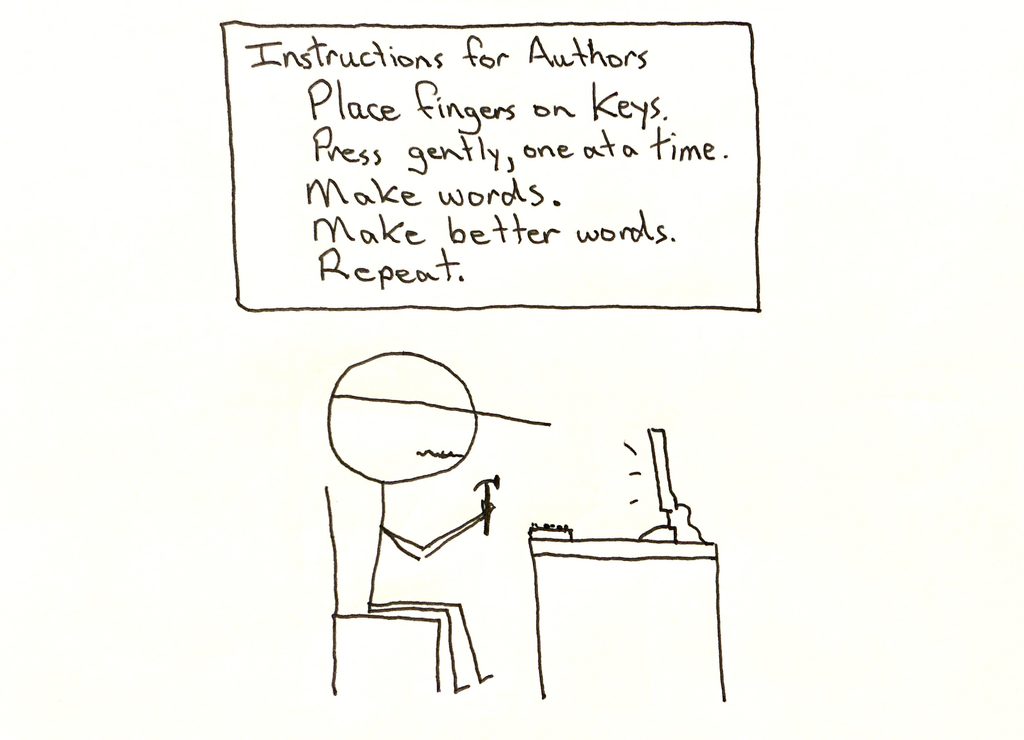
Because I taught high school for a long time, I had to develop skills in writing instructions. I needed students all to approach tasks like exams in a consistent way for the sake of their own achievement. Then I had to figure out how to do the impossible, which is to get teenagers to actually read and then follow the directions I had written.
I tried to have fun with it, because why not? I would write a long list of numbered directions with the pretext of familiarizing students with their textbooks, the sort of activity that will make the eyes of the most conscientious students glaze over. Included in the list would be instructions to stand up and say, “Yes, yes, yes” and to compliment their teacher’s (my) clothing. In the next few minutes we’d have fun as they discovered the first and last numbered instructions were crucial. Instruction number one said to read ALL of the instructions before doing anything. The final instruction was to ignore ALL of the previous instructions and simply sit and wait.
There are two ways to pass this test – you could be one of those who did everything and then laughed at themselves at the end, or be the person who actually read ALL of the instructions and sat bemused as everyone did strange things. The students who truly failed the task were those who maybe pretended to read the instructions but stopped, suspecting that there would be no consequence for doing so..
Anyway, it was an interesting lesson in following instructions. So, who cares?
Anyone in writing and publishing knows that often the only way to make any money is to support other writers. Write about writing. Edit. Conduct workshops. Organize events. The work product of the dizzying number of people who do this casually (not the paid in-depth editors, and not from people like Kurt Vonnegut who know and teach by doing) is to come up with a bunch of instructions, rules of writing if you will, a grab-bag of principles and tricks that help you.
I don’t need to get into them. We’ve all seen the authorial agony aunts littering the web with punchy quips and loads of advice. And they have some applications for sure. But I’ve always wondered if following all of them just means that I come up with the same drivel as everyone else, presented in the same way, with similar characters, themes, and style.
I have only ever found one tip really useful. The hardest thing of all is to cut out all the stuff that nobody wants to read, Elmore Leonard’s “parts that people tend to skip.” Thinking about that, distancing yourself from what you write to that degree is an ability most of us never fully realize. Certainly, some successful authors (no, not naming names, as if anyone cares what I think) reach a point where they refuse to be edited any longer, their books get longer and less interesting and readers feel mostly nothing but disappointment if they ever finish them.
So, what about this little post? Which parts will readers skip?
All of it, of course.
So with a keystroke, I ….